Home › Private Road and Lane Paving
Reliable, professional private road paving in New Orleans, LA from Precision Asphalt New Orleans. Contact us today for a free on-site estimate.
Precision Asphalt New Orleans provides professional private road paving throughout New Orleans, LA, Louisiana and the surrounding area. Our licensed, insured crew delivers safe, clean, on-time work with a free estimate before anything begins. Call (504) 499-0348 or request your free quote.
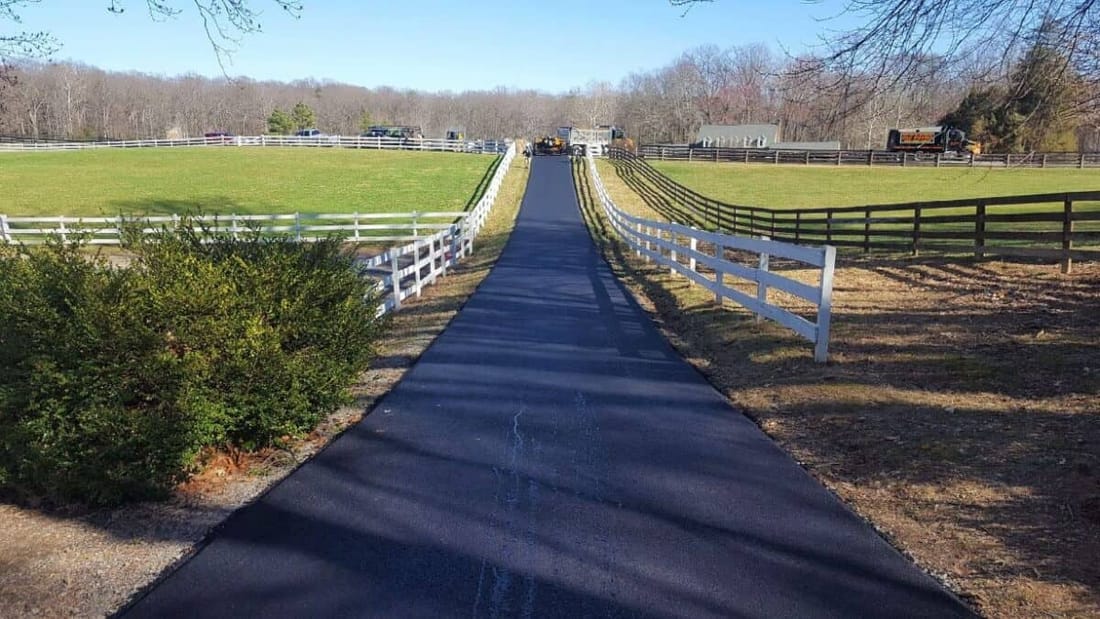
Private Road Paving in New Orleans Built for Real-World Traffic
If you manage a long driveway, a shared private lane, or an access road to a small subdivision in New Orleans, you already know that our heat, sudden downpours, and soft soils are hard on pavement. Precision Asphalt New Orleans focuses on private road paving that is designed for those exact conditions, not a generic one-size-fits-all approach.
Before we ever bring in equipment, we walk the entire route with you. We look at drainage patterns after storms, low spots that hold water, tree root pressure, and existing ruts from delivery trucks and garbage trucks. We also ask how the road is actually used: How many homes use it daily. Do you expect heavy trailers or work trucks. Is there room to widen tight curves for safer passing. Those answers change how we build the road, including thickness, base material, and whether we recommend an overlay or a full rebuild.
Homeowner associations, rural property owners, and small commercial sites around New Orleans often deal with the same headaches: muddy stretches after big rains, washouts on unpaved sections, and potholes that reappear every few months. Our goal with private road paving is to eliminate that cycle by fixing the structure under the asphalt, not just the surface you can see.
How We Build a Long-Lasting Private Road or Lane
Every private road paving project in New Orleans starts with getting the base right. We typically begin by stripping vegetation and any organic topsoil so the pavement is not resting on material that will rot or shift. If there is an older gravel or broken asphalt road, we evaluate whether it can be regraded and reused or if it needs to be removed and replaced.
Next comes grading and shaping. Using motor graders and compactors, we establish a consistent slope so water runs off the road instead of sitting in the wheel paths. On narrow lanes, we tie the edges into side ditches or swales so stormwater has a path to follow. On flat areas common around New Orleans, we often recommend a very slight crown in the center of the lane (a gentle ridge) to help water shed to both sides.
For most private roads, we install a compacted aggregate base. In our area, this is often a limestone or crushed concrete blend that packs tight. Thickness can range from 4 inches on light duty drives to 8 inches or more where garbage trucks and delivery trucks turn around. In low lying or marshy sections, we may place a geotextile fabric under the base to keep the rock from sinking into soft subsoil.
Once the base is compacted and verified with test passes, we install hot mix asphalt from a local plant. For private roads we usually recommend a 2 to 3 inch surface course, and in some cases an additional binder course under it in high traffic or heavy truck areas. Joints are staggered and edges are compacted firmly so they do not crumble into the ditches. Finally, we perform a last roller pass for smoothness so residents and visitors have a comfortable ride.
Material Choices, Design Options, and What Affects Cost
Private road paving costs in New Orleans are driven by more than just the length of the lane. Soil conditions, drainage work, and structural thickness are usually the biggest factors. At Precision Asphalt New Orleans, we walk you through options so you know exactly what you are paying for and why.
On marginal soil, such as soft clay or areas that stay damp, we may suggest undercutting and replacing a portion of the native soil with select fill, or adding a geotextile fabric. This is an upfront cost that often saves significant money later because the pavement is far less likely to rut or sink. In some situations we can stabilize the subgrade with lime or cement, which can be more cost effective on longer roads.
You will also make decisions about pavement structure. For a short private lane serving one or two homes with only passenger vehicles, a single 2 inch asphalt layer over a 4 to 6 inch base can be appropriate. For shared access roads serving multiple homes, multi family properties, or small commercial sites, we recommend 2 lifts of asphalt (a stronger lower lift plus a smoother surface lift) and a thicker base to handle heavier daily use.
Design options include lane width, turnouts, and parking pockets. For example, many New Orleans area shared lanes start narrow and end up with eroded edges where cars pull over to pass each other. We can formally widen these sections and strengthen the shoulders so they hold up. For gated communities or flag lots, adding a paved turnout near the gate often prevents vehicles from chewing up the shoulder while they wait.
Material prices for asphalt and aggregate change with fuel and plant costs, so we provide itemized estimates that show quantities and unit prices. That way, if you need to phase the work, we can plan for a base and initial lift now and a future surface lift when budget allows.
Common Private Road Problems in New Orleans and How We Fix Them
Property owners in the New Orleans area tend to run into the same private road issues: standing water, potholes returning after every rain, washboarding on gravel sections, and cracking from tree roots. Precision Asphalt New Orleans addresses each problem by targeting the cause instead of just patching the symptom.
Standing water usually means the existing road has lost its original shape. We correct this by regrading the base to restore crown or cross slope, and in many cases we cut shallow ditches or install culverts at low crossings so water has somewhere to go. In areas that flood frequently, we may raise the road profile with additional base material before paving so it sits slightly higher than the surrounding ground.
If potholes keep coming back in the same spots, it is often due to saturated or weak subgrade. Rather than filling them with cold patch, we saw cut and excavate those localized areas, replace weak soil with suitable fill or base, compact thoroughly, and then pave with hot mix tied into the surrounding asphalt. This method holds up far better under the weight of service trucks.
For gravel lanes that have become washboarded or dusty, some owners want a full conversion to asphalt; others prefer to keep a gravel look but improve performance. We can fine grade and compact the existing gravel, then place a chip seal or a double surface treatment to bind the surface and reduce raveling and dust. For full asphalt conversion, we treat the gravel as a base, add material where needed to reach proper depth, then install asphalt on top.
Tree roots are another common problem along private drives lined with oaks. Instead of simply cutting down into the root zone, which can harm trees, we try to adjust alignment slightly or reinforce the pavement structure where roots are present. In some cases, root barriers or selective root pruning in coordination with an arborist can protect both the trees and the new pavement.
What to Expect When You Work With Precision Asphalt New Orleans
Our customers usually have neighbors, tenants, or residents to keep informed, so we keep the private road paving process very clear and predictable. Once you approve a proposal, we confirm a schedule that accounts for plant hours, likely weather, and any access needs so people are not unexpectedly blocked in.
The first day or two is typically site prep: clearing, proof rolling the subgrade to locate soft spots, and shaping ditches or swales. We will let you know in advance if there are times when access will be limited and help you plan parking so no one is stranded. On active lanes, we can often pave one side at a time or work in sections to maintain at least one usable route.
During paving, our crew manages traffic with spotters and signage, and we coordinate with delivery services if needed. Fresh asphalt usually needs several hours to cool before it can take regular traffic, and we will give you clear guidelines on when passenger vehicles, delivery trucks, and heavy equipment can safely drive on the new surface.
At the end of the job, we walk the road with you and point out any areas where special care helps extend life, such as avoiding sharp turning of heavy trucks in the same spot or preventing landscape crews from dumping soil into ditches. We also discuss optional follow up services like crack sealing and sealcoating on the right schedule so you can budget for long term maintenance instead of being surprised by major repairs.
If you are planning a new private access road or are tired of patching the same ruts and potholes, Precision Asphalt New Orleans can look at your specific site and traffic, not just a map, and put together a practical plan that fits the way you actually use your property.