Home › Asphalt Pathways, Sidewalks, and Trails
Reliable, professional asphalt pathway paving in New Orleans, LA from Precision Asphalt New Orleans. Contact us today for a free on-site estimate.
Precision Asphalt New Orleans provides professional asphalt pathway paving throughout New Orleans, LA, Louisiana and the surrounding area. Our licensed, insured crew delivers safe, clean, on-time work with a free estimate before anything begins. Call (504) 499-0348 or request your free quote.
Durable Asphalt Pathways, Sidewalks, and Trails in New Orleans
Asphalt pathways, sidewalks, and walking trails take a lot of abuse in New Orleans. Foot traffic, bikes, strollers, scooters, and constant moisture from our Gulf climate can break down a weak surface in just a few seasons. Precision Asphalt New Orleans focuses on designs and materials that can actually stand up to local conditions so you get a smooth, safe surface for years, not months.
We install asphalt pathway paving for neighborhoods, schools, churches, parks, commercial properties, and large residential lots across the New Orleans metro. Whether you need a short connector from your parking lot to the front door, or a winding trail system around a retention pond, we plan the work around how your property is actually used. That means thinking about where water goes during heavy rain, how people move through the space, and what kind of maintenance you are willing to take on.
Our team is local, so we understand how heat, sudden storms, and soft Louisiana soils affect smaller paved surfaces differently than large parking lots or streets. We adjust our base prep, asphalt mix, and slopes to handle puddling, minor subsidence, and tree root pressure that are all common in New Orleans. From the first site visit, you can expect straightforward explanations of your options and clear recommendations about what will be safest and most cost effective for your property.
How We Design Asphalt Pathways, Sidewalks, and Trails
A good asphalt path starts with a layout that fits the land instead of fighting it. When Precision Asphalt New Orleans walks your site, we look for existing drainage patterns, low spots that hold water, nearby trees, and utilities. We discuss your goals in detail, such as ADA accessibility to building entrances, a loop trail for walking or jogging, or a simple straight sidewalk from the driveway to the porch.
Width and thickness are tailored to how the path will be used. For light residential foot traffic, we may recommend a 4 to 5 foot wide path with a 2 to 3 inch asphalt surface. For shared use with bikes, light carts, or facility equipment, we often increase both width and asphalt thickness for comfort and longevity. High use commercial or park trails may need up to 8 or 10 feet in width and a heavier section to reduce rutting.
We also plan slope and crossfall very carefully in New Orleans. Paths usually get a gentle cross slope of about 1.5 to 2 percent so water runs off instead of pooling, while still staying within ADA guidelines where accessibility is required. On sites that flood frequently, we may suggest slightly elevating the path with imported base material so that your walkway stays usable even when nearby grass is soggy.
Our Asphalt Pathway Paving Process, Step by Step
Once we agree on a layout and section, Precision Asphalt New Orleans follows a sequence that is designed for a long lasting surface in our wet climate. First, we mark utilities and set grade stakes so everyone is clear on the final elevation. Then we handle excavation, which might be as light as stripping sod or as extensive as digging out soft, organic soils in low lying areas.
Next comes the base, which is what really keeps a path from cracking and sinking. For most New Orleans projects, we use a compacted limestone or crushed concrete base that is 4 to 8 inches thick depending on soil conditions and expected loading. In backyards or park areas with very soft ground, we may add geotextile fabric under the base to help separate the soil from the rock and reduce future settlement.
We grade and compact the base with plate compactors and small rollers suited to tight walking path layouts, and we fine tune the slope to move water away from buildings and low spots. Once the base is approved, we install hot mix asphalt delivered from a local plant. For smaller paths and tight curves, we often place asphalt by hand raking and then compact with a vibratory roller. On longer straight sections, we may use a small paver for a more uniform surface.
We usually install asphalt for pathways in one lift of 2 to 3 inches compacted thickness, or two lifts for heavier duty trails. Edges are compacted carefully to avoid unraveling, and in areas without concrete edging we create a slightly beveled edge so adjacent soil and grass can be graded up cleanly. After final rolling, we typically recommend keeping foot traffic light for the first 24 hours to allow the surface to cool and harden.
Material Options, Finishes, and Features for Your Walkway
Most asphalt pathways, sidewalks, and trails in New Orleans use a standard hot mix asphalt, but there are options depending on your goals. For a smoother finish that is more comfortable for wheelchairs, walkers, and strollers, Precision Asphalt New Orleans may specify a finer aggregate surface course. For trails that also see occasional light vehicle use, such as maintenance carts, we may choose a slightly coarser mix that offers more internal strength.
If you want a more finished edge, we can pair asphalt paths with concrete or brick borders, or install a shallow concrete ribbon on one or both sides. This helps visually define the path, improves edge stability, and can reduce vegetation encroachment. In residential yards we often tuck the path edge slightly below final grass grade so the lawn can grow right up to the asphalt, creating a simple and clean look that is easy to mow.
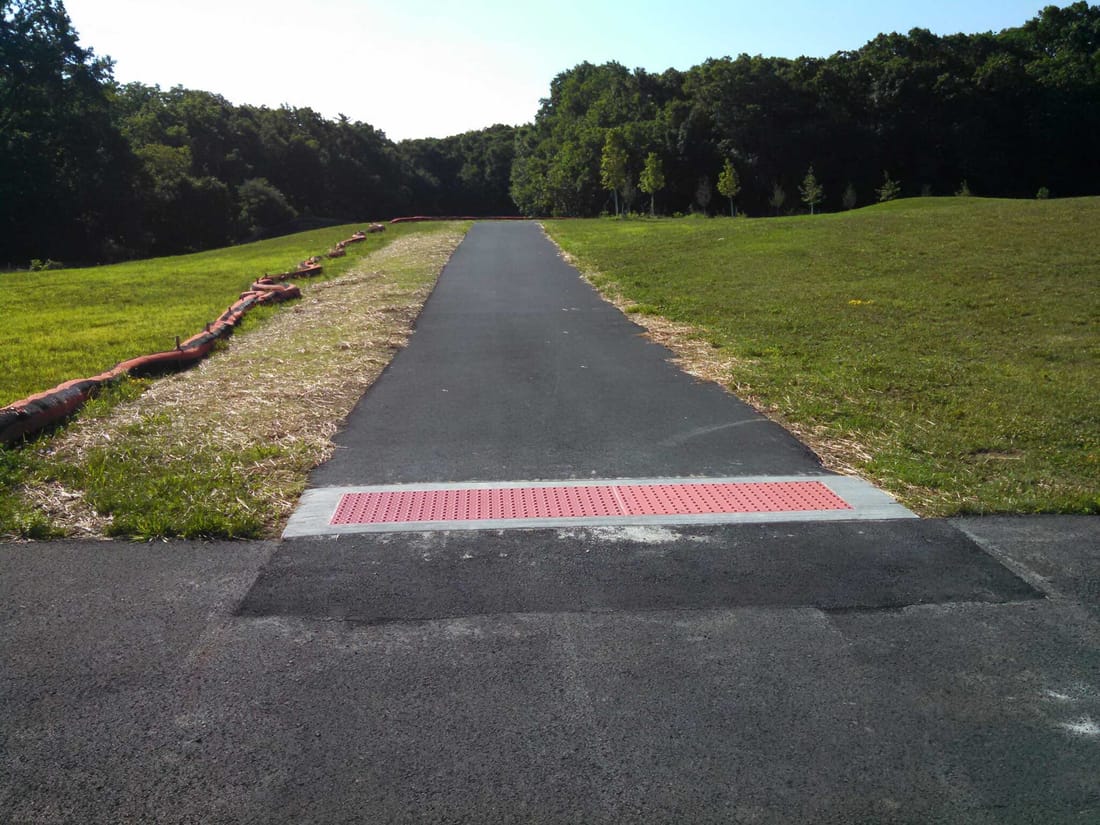
Lighting, crossings, and markings can also be integrated. For complexes with parking lots, we can install asphalt transitions at crosswalks, apply reflective striping where pedestrians cross drive lanes, or add warning textures at ADA curb ramps. On trails in private communities or business parks, we coordinate with your electrician or lighting contractor so poles, conduits, and junction boxes are planned before paving starts. We also discuss surface color and heat considerations, since dark asphalt can get hot in summer, and we can recommend shading or routing options to keep users comfortable.
Costs, Local Climate Challenges, and Common Issues
Asphalt pathway paving costs in the New Orleans area are driven by three main factors: base preparation, access, and thickness. A simple, straight path across firm ground with good access for equipment will be less expensive than winding trails through soft soils or tight courtyards where everything must be done with smaller machines or by hand. Precision Asphalt New Orleans provides line item estimates so you can see how each design choice affects the price.
Our climate creates specific challenges you should know about before building a new path. Intense downpours, frequent standing water, and high humidity can accelerate base movement and surface breakdown if shortcuts are taken. That is why we avoid paving directly over topsoil or organic fill, and we schedule work around rain whenever possible. Paving on saturated base is a common mistake that leads to early cracking and rutting, so we will sometimes pause a job a day or two to let the base dry and recompact it if storms roll through.
Common issues with older asphalt paths in New Orleans include tree root lifting, edge crumbling where paths meet grass, and low areas that collect water. When we repair or replace these, we look at the cause rather than just patching the symptom. For example, a lifted section near an oak tree might be better solved with a gentle reroute around the root zone, or by installing root barriers, instead of repeated patching. For edge failures, we might widen the base and thicken the asphalt slightly along the sides, or add a concrete or stone edge restraint where traffic and mowing are heavy.
When to Repair, Resurface, or Replace Your Asphalt Path
Not every worn or cracked path needs to be torn out. Precision Asphalt New Orleans will walk your sidewalks and trails with you and explain which areas are cosmetic and which are true safety or structural problems. Hairline surface checking, minor raveling, and shallow dips can often be corrected with targeted patching, skin overlays, or a thin leveling course followed by a new surface layer.
Resurfacing is usually an option when the base is still stable but the asphalt surface is aged or rough. We clean the existing surface, mill down high spots if needed, and then place a new layer of asphalt to restore smoothness and proper drainage. This can be a cost effective way to extend the life of paths in apartment communities, schools, and business parks without full reconstruction.
Full replacement is recommended when there are extensive alligator cracks, repeated sinking in the same locations, or large sections that move underfoot. In these cases the underlying base or subgrade has failed. We remove the old asphalt, undercut soft areas, rebuild the base, then repave. For many New Orleans properties, doing this correctly once is cheaper in the long run than multiple patch jobs that never really solve the issue. We always explain your options, give honest timelines, and help you choose a plan that matches your budget and how long you plan to use the property.