Home › Asphalt Striping and Pavement Markings
Reliable, professional asphalt striping in New Orleans, LA from Precision Asphalt New Orleans. Contact us today for a free on-site estimate.
Precision Asphalt New Orleans provides professional asphalt striping throughout New Orleans, LA, Louisiana and the surrounding area. Our licensed, insured crew delivers safe, clean, on-time work with a free estimate before anything begins. Call (504) 499-0348 or request your free quote.
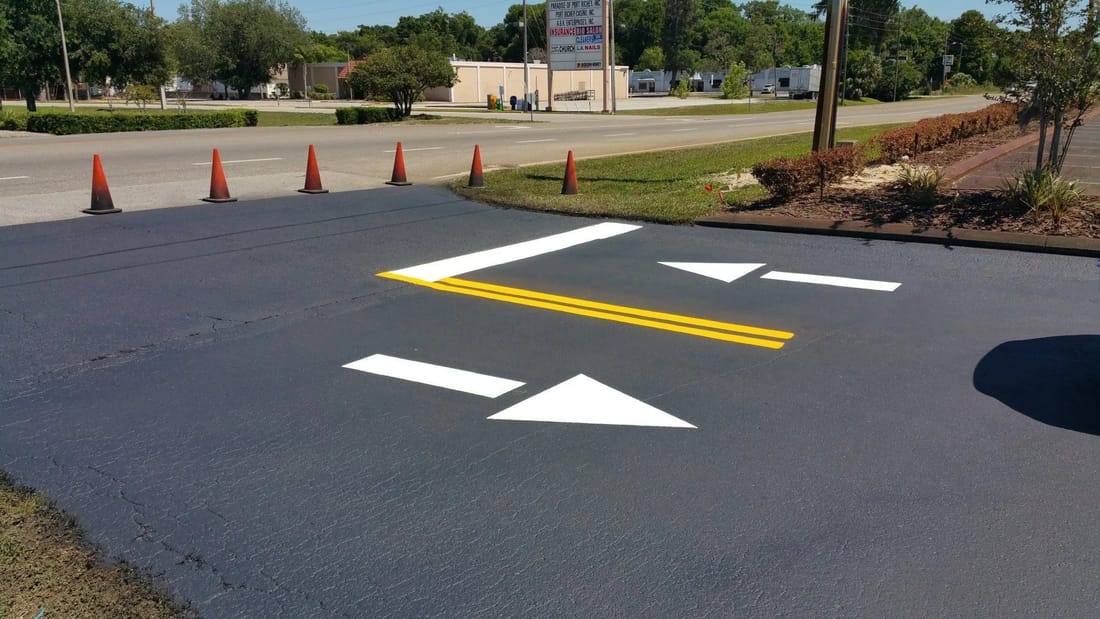
Practical Asphalt Striping for New Orleans Properties
Asphalt striping is not just paint on blacktop. On a busy New Orleans lot, clear striping is what keeps cars moving, protects pedestrians, and keeps you in line with ADA and fire lane rules. Precision Asphalt New Orleans focuses on striping that holds up in our heat, humidity, and heavy rain.
For commercial parking lots, we plan the layout so people do not have to guess where to drive or park. That means the right stall width for local vehicle sizes, safe backing room, and ADA compliant accessible spaces located close to your main entrance. For multifamily properties or condos, we often add unit number markings, reserved stalls, and visitor spots so management can enforce parking rules without constant arguments.
In New Orleans, we also pay attention to flood patterns and drainage. Striping cannot change how water flows, but we can avoid placing crosswalks or loading zones in the deepest puddle areas and we make sure markings stay visible even when the surface darkens from moisture. For industrial sites and warehouses, we design truck lanes, loading zones, and “no parking” areas around docks so your delivery schedule is not blocked by poorly marked spaces.
Before any work begins, we walk the site with you. We look at traffic patterns at your busiest times, turning paths for large vehicles, and any accident or near miss locations you are concerned about. That walkthrough is what shapes the layout, not just a generic template. Precision Asphalt New Orleans will bring tape, chalk, and measuring wheels to sketch ideas on the ground so you can see and adjust the design before a single line of paint is sprayed.
How Professional Pavement Markings Are Actually Done
Good asphalt striping follows a sequence. We start with surface prep. The asphalt needs to be dry and reasonably clean or the paint will peel. We use power blowers and, if needed, mechanical brooms to clear sand, oak leaves, Mardi Gras beads, and other debris that collect in New Orleans lots. In oil stained areas, we spot treat with a cleaner or primer so the paint can bond.
If there is old striping, we decide whether to cover, remove, or reconfigure. When the new layout mostly matches the old one, we can often restripe directly on top, as long as the existing lines are not flaking. If the layout is changing or the old markings are confusing, we use grinding or blackout paint to hide the unwanted lines first. On high profile entrances, like retail centers along major corridors, grinding is usually worth it so customers are not confused by ghost lines.
Layout comes next. We mark centerlines, stall edges, and key reference points with chalk or temporary paint. For angled parking, we calculate the angle based on drive aisle width and traffic flow. A tighter lot in an older New Orleans neighborhood might need 45 degree stalls, while newer shopping centers with wide aisles can often use 60 or 90 degree parking. We use measuring tapes, lasers, and templates to keep things square and consistent.
Once the layout is checked and approved, we strip using airless line striping machines. These machines put down consistent paint thickness at a set width so lines stay straight and uniform. We apply symbols like arrows, ADA wheelchair logos, and numbers using heavy duty stencils. For stop bars and crosswalks, we double check the distance to the stop sign or intersection point, since local drivers rely on those markings in poor visibility, especially during heavy storms.
After striping, we cone off areas long enough for the paint to set. In our hot Gulf climate, most waterborne traffic paints dry to the touch in 15 to 30 minutes, but we still recommend keeping vehicles off new markings for at least 1 to 2 hours to avoid tracking or smudging.
Paint Types, Reflectivity, and Local Weather Considerations
New Orleans weather is tough on pavement markings. High UV exposure, heavy rains, and the occasional flood event all shorten the life of cheap striping. Precision Asphalt New Orleans selects materials with this in mind and we explain the tradeoffs clearly before work starts.
Most commercial work uses waterborne traffic paint, often called latex traffic paint. It is cost effective, cures quickly, and is accepted by local codes and inspectors. On busy retail centers or hospital drives, we can upgrade to high build paint or add glass beads for reflectivity. The beads are dropped into the wet paint and give you that bright shine when headlights hit the lines at night, which helps a lot in storm conditions and along darker side streets.
Thermoplastic markings are another option on certain roadways or entrances. Thermoplastic is heated and applied as a thick layer that bonds tightly to the asphalt. It lasts longer than paint, especially for arrows, stop bars, and crosswalks at high traffic drive lanes. It costs more up front and needs the right pavement condition and temperature to install, so we usually recommend it for specific locations instead of entire lots.
Scheduling around weather is important in New Orleans. Striping cannot be done on a wet surface and it should not be started when a storm cell is an hour out. We watch local radar and prefer to work in a window with several dry hours. In summer, we often work earlier in the morning or later in the day to avoid the combination of extreme pavement temperature and sudden pop up thunderstorms. In cooler months, drying times slow down, so we adjust traffic control and area closures accordingly.
If your lot is in a low area that regularly floods, we will talk honestly about realistic life expectancy. Frequent standing water and silt will wear markings faster. In those cases, it can be smarter to use a more durable material in the worst areas and standard paint elsewhere, so your budget goes where the abuse is highest.
Layout Design, ADA Compliance, and Common Local Issues
A good striping plan starts with your goals and legal requirements. Precision Asphalt New Orleans reviews the basics of ADA and local fire codes with you so nothing critical gets missed. For ADA accessible parking, we make sure you have the right number and type of spaces based on total space count, including van accessible stalls with wider access aisles. We place those spots closest to the primary accessible entrance and ensure there is a clear path of travel from the stall to the doorway.
We also look at fire lanes and emergency access. Many New Orleans properties, especially older mixed use buildings, have tight access drives. We clearly mark fire lanes with red curb striping and “No Parking Fire Lane” lettering at required intervals so enforcement is simple. For schools, churches, and daycares, we often add pick up and drop off zones with bold striping and signage so buses and parents are not blocking through traffic.
A common local problem is faded or patchy markings from previous repairs. After utility companies cut into pavement, they often leave behind mismatched asphalt patches that split old lines. We realign and repaint those markings so drivers are not guessing which side of a patch is the correct lane or stall boundary. Where patches cause height changes, we may recommend additional markings or symbols to make the transition more obvious, especially at pedestrian crossings.
For downtown or tight neighborhood lots, maximizing capacity without creating fender benders is key. We look at vehicle mix, how often people park large trucks or work vans, and how pedestrians move between buildings. Sometimes that means giving up one or two stalls to add a safer pedestrian route, loading zone, or turn around area. The long term savings in reduced accidents and complaints usually outweighs the loss of one parking space.
Before we finalize any plan, we provide a clear diagram that shows stall counts, ADA locations, traffic flow arrows, and any special markings like customer pickup stalls or rideshare zones. That way building owners, property managers, and tenants are all working from the same picture, which cuts down on disputes later.
Pricing, Maintenance, and What To Ask Before Hiring
The cost of asphalt striping in New Orleans depends on several specific factors: total square footage of the lot, number of individual markings (stalls, arrows, numbers, ADA symbols), amount of layout work needed, and whether old markings must be removed or blacked out. Materials matter too. Standard waterborne paint is more affordable. High build paint, thermoplastic, or extensive reflective bead application increase the price but can be worth it on busy sites.
At Precision Asphalt New Orleans, we usually price new layouts by a combination of linear footage and item counts. For example, there may be a base rate per standard parking stall, separate prices for ADA stalls and symbols, and unit pricing for arrows, crosswalks, stop bars, and custom wording. If a lot needs major reconfiguration or significant line removal, we call that out as a separate line item so you can see how much each part of the job adds.
Once the striping is complete, plan on regular inspections. In our climate, most high traffic lots need restriping every 18 to 36 months. Lower traffic residential or light commercial lots may go longer. Watch for key signs that it is time, like barely visible stall lines at night, faint ADA symbols, or confusion from new drivers. We can set up a simple maintenance cycle so you are not waiting until lines are completely gone.
When you talk to any striping contractor, ask a few direct questions. What paint system are you using and why for this site. How will you handle traffic control so customers can still reach my business. What is your plan if a sudden storm rolls in during work. How will you treat oil stained or cracked areas so the paint actually sticks. Ask to see example photos from similar New Orleans properties, especially if you manage hospitals, hotels, or large retail centers.
Precision Asphalt New Orleans provides written proposals that spell out materials, scope, and any optional upgrades, along with a schedule that respects your operating hours. We coordinate to work off peak times, often evenings or early mornings, so your tenants or customers are not heavily disrupted while we bring your pavement markings back to a clear, safe condition.