Home › Commercial Asphalt Resurfacing & Overlays
Reliable, professional commercial asphalt resurfacing in New Orleans, LA from Precision Asphalt New Orleans. Contact us today for a free on-site estimate.
Precision Asphalt New Orleans provides professional commercial asphalt resurfacing throughout New Orleans, LA, Louisiana and the surrounding area. Our licensed, insured crew delivers safe, clean, on-time work with a free estimate before anything begins. Call (504) 499-0348 or request your free quote.
Commercial Asphalt Resurfacing for New Orleans Properties
Commercial asphalt resurfacing is often the most cost‑effective way to restore a worn parking lot, drive lane, or access road without paying for a full tear out. At Precision Asphalt New Orleans, we focus specifically on resurfacing and overlay work for shopping centers, office parks, industrial sites, churches, schools, and multi‑family complexes throughout the New Orleans area.
In practical terms, a resurfacing or overlay means installing a new structural layer of hot mix asphalt over your existing pavement. When done correctly, this bonds to the prepared base and adds strength, smoothness, and curb appeal for 8 to 15 years, depending on use and maintenance. The key is knowing when resurfacing is appropriate and when a full reconstruction is the smarter investment.
In New Orleans, water and heat are the main enemies of asphalt. Frequent heavy rain, high humidity, and intense sun, combined with occasional flooding or standing water, break down oxidized surfaces faster than in cooler, drier markets. Our evaluations focus on how deep that damage goes, not just what you can see on the surface, so we can recommend the right approach for your specific property rather than a one‑size‑fits‑all solution.
How We Evaluate Your Lot for Resurfacing or Overlay
Not every parking lot is a good candidate for commercial asphalt resurfacing. Before we quote an overlay, Precision Asphalt New Orleans performs a structured site evaluation so you are not putting new asphalt over a failing base.
We start with a visual walk‑through, looking for alligator cracking, rutting in wheel paths, standing water, oil‑saturated areas, and edge failures near curbs and gutters. Then we perform core checks or test cuts where needed. These are small, controlled cuts in representative areas that let us see the thickness of the existing asphalt and the condition of the base material underneath.
If more than about one‑third of the surface shows severe fatigue cracking, or if the base is pumping water or visibly unstable, we will recommend partial or full reconstruction in those areas instead of a simple overlay. We also check elevations around drains, building entrances, and ADA routes. In New Orleans, many lots were built decades ago, and repeated thin overlays have sometimes raised the surface above door thresholds or created flat areas where water pools. Our evaluation includes planning for proper slopes so your new surface sheds water instead of trapping it.
During this visit we also discuss traffic patterns: where delivery trucks turn, where ride‑share pickups occur, and where customers tend to cut across stalls. These high‑stress zones often need thicker overlay sections or localized base repair, and we incorporate that into your resurfacing plan and pricing.
Step‑by‑Step Commercial Asphalt Resurfacing Process
A successful commercial asphalt overlay is all about surface preparation and attention to transitions. Precision Asphalt New Orleans follows a defined process that we adjust to each site, but the core steps are consistent.
First, we mill or grind where necessary. This is crucial in front of building entrances, at roll‑over curbs, around trench drains, and where your lot meets city streets. Milling removes a controlled depth of old asphalt so that when we add the new overlay, finished elevations remain correct and water flows to inlets instead of toward your doors.
Next, we perform localized base repairs. Areas with potholes, severe alligator cracking, or settled trenches are saw‑cut, excavated, and rebuilt with compacted aggregate and new base asphalt. Resurfacing over weak spots simply guarantees that those failures will return through the new layer, so we fix them before any overlay is placed.
After structural repairs, we clean and prep the surface. The lot is swept and blown clean to remove dust, sand, and organic material. We then apply a tack coat, a thin layer of asphalt emulsion that bonds the new overlay to the old surface. Without a good tack coat, overlays can delaminate and slide under heavy braking or turning.
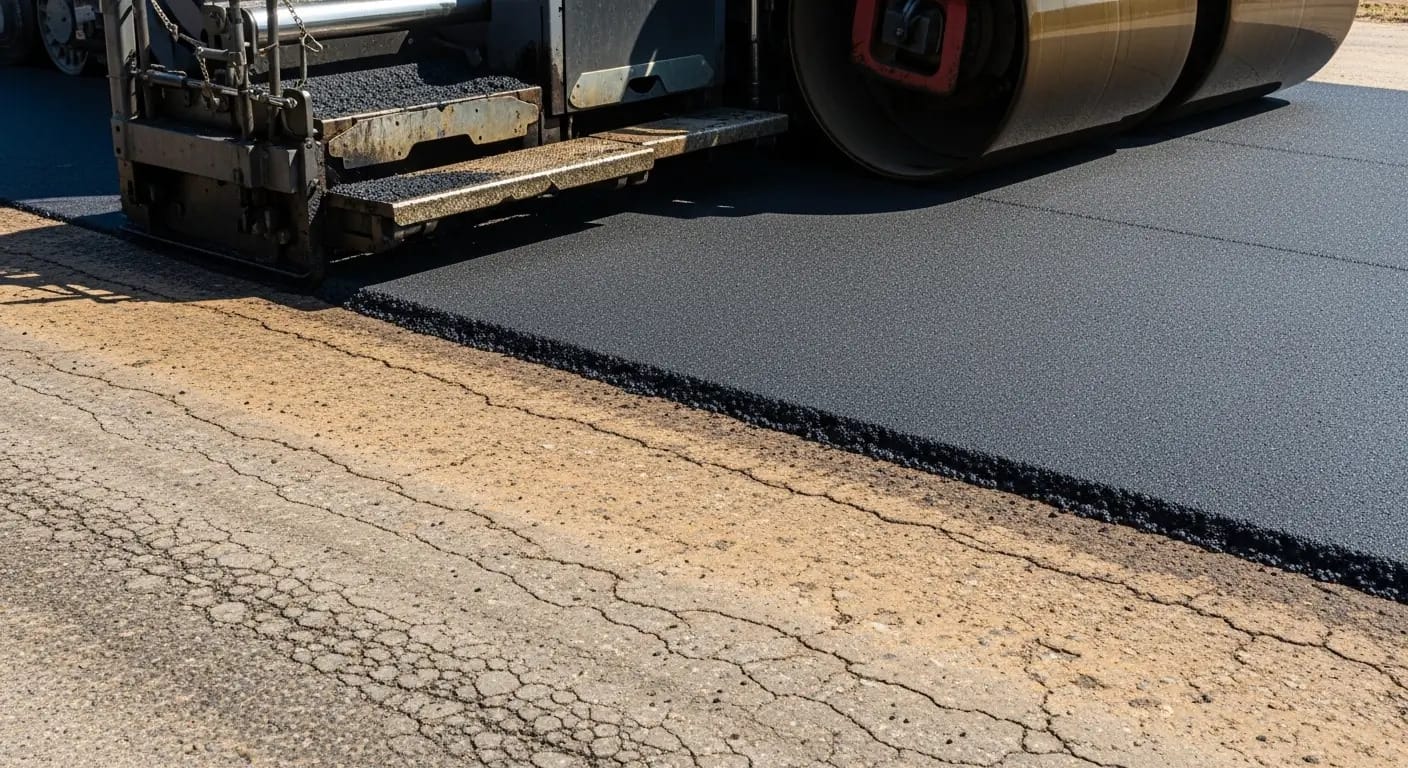
Once the tack has broken (become slightly sticky rather than wet), we place the new hot mix asphalt using a commercial paver for consistent density and grade. Thickness typically ranges from 1.5 to 3 inches, depending on traffic loads and existing conditions. Our crews compact the new layer with steel drum and pneumatic rollers, achieving the density required for long‑term performance in our climate.
Finally, we reinstall pavement markings, ADA stalls and routes, and any wheel stops or bollards, coordinating with your business hours to minimize impact on tenants and customers.
Overlay Design Options for New Orleans Businesses
Resurfacing is not just about putting down blacktop. The mix type, thickness, and layout all affect how your lot performs under New Orleans conditions. Precision Asphalt New Orleans designs each commercial overlay around real‑world use instead of a generic spec.
For heavy truck traffic areas like loading docks, dumpster pads, and main drive lanes, we often recommend a thicker overlay, sometimes combined with a stronger base asphalt in localized panels. For general customer parking and light‑duty access routes, a standard overlay thickness is usually sufficient, which saves cost without sacrificing performance.
We also pay particular attention to drainage design. In low‑lying areas on the Westbank, Gentilly, New Orleans East, and parts of Metairie, even a slight change in pitch can create chronic puddles. During layout, we shoot grades and set paving stringlines so water drains to existing or upgraded catch basins. In some projects, we add small valley gutters or re‑shape cross slopes to push water away from building foundations.
Striping and layout are planned before paving so the overlay supports your current or improved traffic flow. This may include reconfiguring stalls for better circulation, enlarging accessible spaces to stay in step with ADA standards, or adding clearly marked crosswalks for pedestrian safety. We build these changes into the resurfacing plan so the new asphalt thickness and transitions line up with your final striping design.
If your property is managed by an HOA or commercial association, we can coordinate overlay details to meet any appearance or color requirements, such as matching adjacent properties or maintaining consistent stall layouts across a center.
What Drives the Cost of Commercial Asphalt Resurfacing
Property managers in New Orleans are often comparing resurfacing quotes that look very different on price. Understanding what actually affects the cost helps you choose a contractor based on real value instead of guesswork. Precision Asphalt New Orleans is transparent about the factors that change pricing.
The biggest cost drivers are overlay thickness, amount of milling and base repair required, and site access. A thin overlay over a relatively sound lot will be less expensive than a thicker section over a heavily fatigued surface that needs patching and leveling. However, going too thin to save money can shorten the lifespan significantly, especially in our climate where water infiltration and heat expansion are constant.
Milling around drains, sidewalks, and entrances adds labor and equipment time but prevents future water issues and unsafe trip points. Lots with many tie‑ins to city streets, multiple building entrances, or a mix of asphalt and concrete will require more careful transition work than a simple single‑building site.
Traffic management is another cost component that is often overlooked. Projects at active retail centers or medical offices may need to be staged in multiple phases or scheduled at night. This can increase labor costs, but it lets tenants keep operating while the work is completed.
Material prices in southeast Louisiana are also influenced by current crude oil markets, plant location relative to your site, and haul distance. We source mixes from reliable local plants to control both cost and quality, and we specify commercial‑grade hot mix that is appropriate for our region’s temperature range, not just the minimum that will pass inspection on paving day.
Common Local Issues and How We Solve Them
New Orleans presents challenges that many generic paving guides never mention. At Precision Asphalt New Orleans, we plan commercial asphalt resurfacing projects with these local realities in mind so your new surface holds up.
Standing water is the number one problem we see on aging lots. Over time, minor settlement, repeated overlays, and clogged drains create birdbaths and long, shallow ponds. As part of an overlay, we can install wedge leveling courses prior to the main overlay to subtly adjust slopes. In more severe cases, we integrate additional inlets or raise existing structures to match the new grades.
Flood events and tidal influences can soften underlying soils, especially in areas built over marsh or fill. Where we suspect a weak subgrade, we extend base repairs deeper, add geotextile fabrics where appropriate, or recommend thicker pavement sections in critical areas like fire lanes and trash corral approaches.
Oil spots in restaurant and automotive areas are another common issue. Oil breaks down asphalt binders, which leads to raveling and potholes that come back quickly if they are not treated correctly. Before overlaying, we either remove and replace contaminated sections or treat them with specialized primers that help the new asphalt bond.
In older parts of the city, lots often butt directly against concrete sidewalks, historic brick, or stone curbs. We use careful saw‑cutting and tailored transition details so the overlay ties in cleanly without damaging adjacent materials. Where ADA access routes must be preserved or brought into compliance, we design the finished elevations to meet slope and landing requirements from the start.
Planning, Permits, and Scheduling Your Project
Most private commercial resurfacing projects in New Orleans and surrounding parishes do not require full ground‑up permits, but there are still rules and coordination steps to handle. Precision Asphalt New Orleans assists with these so your project does not stall unexpectedly.
If your work changes access to a city street, modifies drainage structures that tie into public systems, or affects sidewalks or rights‑of‑way, we coordinate with the appropriate municipal or parish office to ensure compliance. For properties with recorded stormwater management plans, such as newer retail or industrial developments, we design overlays to maintain or improve drainage performance so you stay in compliance with those documents.
HOAs, condo boards, and commercial ownership groups often have their own approval processes and notification requirements for tenants. We can provide clear scopes of work, overlay sections, and phasing maps you can share with your board and tenants, along with sample notices detailing which areas will be closed and when.
Scheduling is built around your operating hours. For medical offices, we often pave evenings or weekends and phase work to keep patient drop‑off routes open. For retail centers, we may tackle outlying parking fields first, then rotate through primary customer areas during lower traffic days. Our crews set and maintain barricades, tape, and signage so customers and delivery drivers understand which areas are open.
Before we leave, we walk the site with you or your property manager, review stripe layouts, check transitions, and explain recommended cure times before allowing heavy loads or tight turning maneuvers. We also outline a basic maintenance plan so you can get the longest life and best appearance from your commercial asphalt resurfacing investment.